- DMS for Healthcare Hub
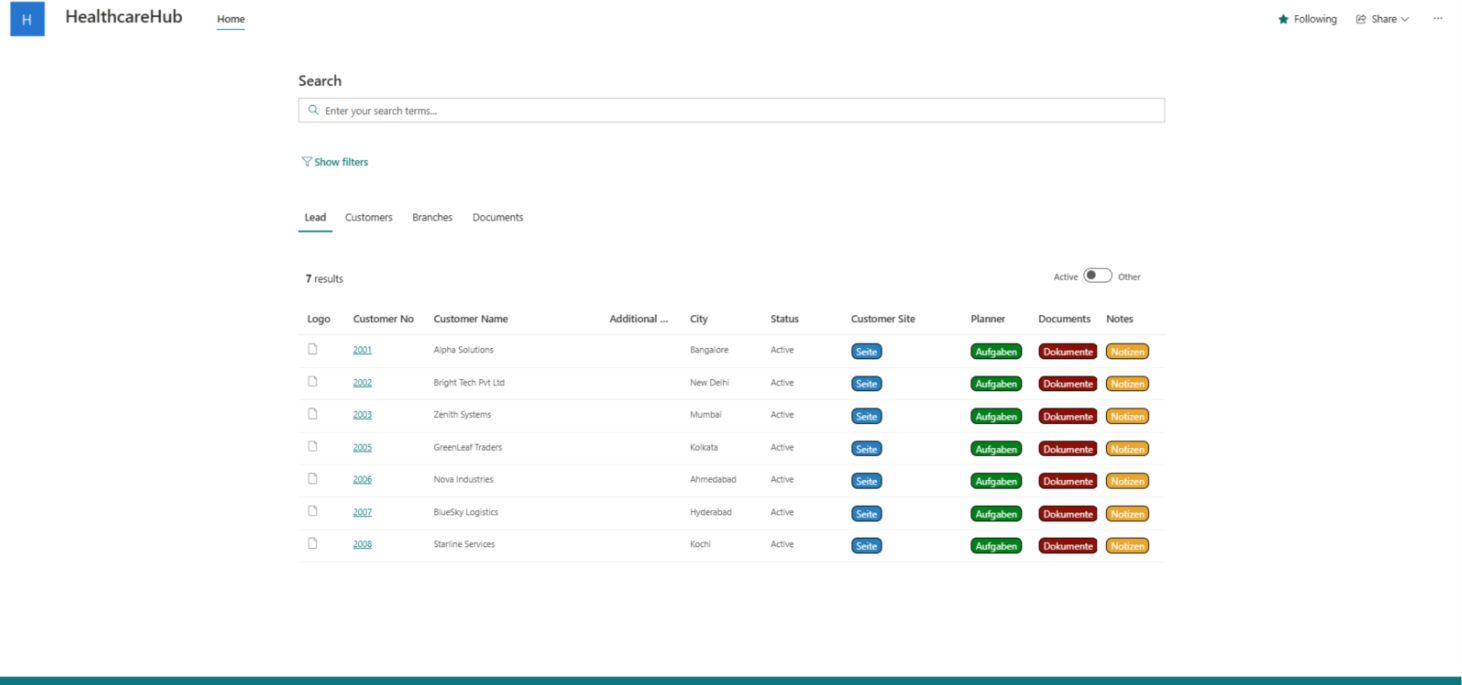
Centralized DMS solution for efficient client and branch management, built on SharePoint Online using PnP Modern Search Web Parts.
The system enables seamless access to client and branch information through powerful search and filtering features. It simplifies data management, minimizes manual effort, and enhances information visibility across departments. With a low-code architecture, the solution optimizes daily operations, ensures data consistency, and provides a secure, scalable platform for business growth.
2. Challenge
The organization regularly handles a growing volume of client and branch information, including business details, contact data, and supporting documents such as contracts or registration papers. Managing this information accurately is essential for maintaining relationships and ensuring smooth communication between the company and its clients.
However, the existing system relied heavily on Microsoft Excel spreadsheets for storing and tracking all client data. While this approach worked initially, it soon became inefficient and unreliable as the number of clients and branches increased. Excel offered no dedicated structure for managing complex relationships between clients and their multiple branch locations, making data retrieval slow and prone to errors.
Additionally, there was no proper document storage mechanism in place. Important files related to clients—such as contracts, correspondence, and compliance records—were scattered across local drives and email attachments. This lack of centralization made it difficult to locate or verify documents when needed, increasing the risk of data loss and inconsistencies.
As the business expanded, these limitations led to significant operational challenges:
- Duplicate and inconsistent client records across teams
- Time-consuming manual updates and searches
- No unified visibility of client-branch relationships
- Difficulty in securely sharing or referencing client-related documents.
- Growing inefficiencies and risks of non-compliance with data management policies
3. Solution
At first glance, managing client and branch information may seem straightforward: store the data and retrieve it when needed. However, for an organization handling hundreds of clients and multiple branches, with each branch requiring accurate tracking of location-specific details, the system needed to be robust and scalable. With the anticipated growth of clients and branches, an efficient, centralized solution became critical.
To begin with, our team conducted a thorough analysis to gather and define the requirements for an effective DMS system that would meet the organization’s operational needs. After discussions with key stakeholders, the following functionalities were agreed upon:
- Centralized Client and Branch Management:
A single SharePoint-based platform to store all client and branch information, ensuring consistent and up-to-date data across departments.
- Advanced Search and Filtering with PnP Modern Search Web Parts:
Dynamic search capabilities allowing users to quickly locate clients or branches. Refiners and filters provide granular control to narrow down results by city, postal code, or other key attributes.
- Customizable Display Layouts:
Using PnP Search Results Web Parts and Handlebars templates to present client and branch data in a clear, user-friendly hierarchy.
- Document Storage and Management:
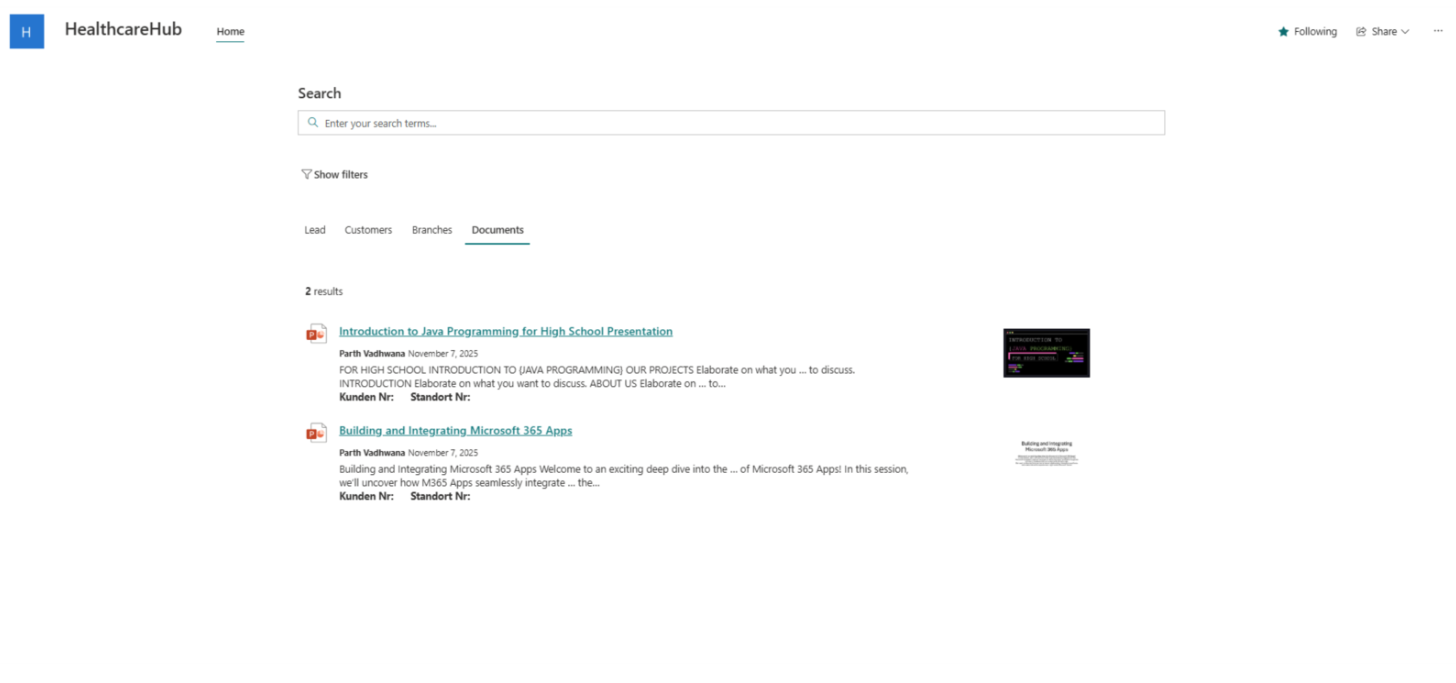
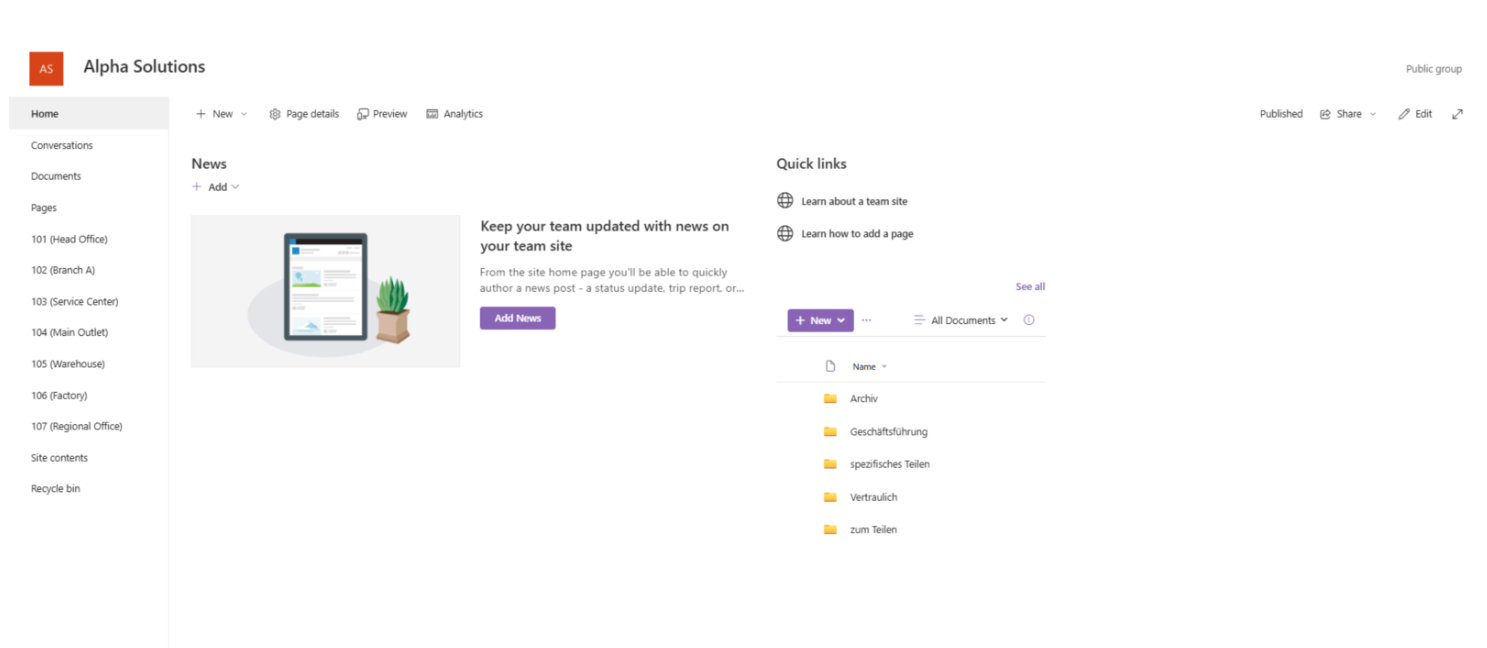
Each client and branch record can have associated documents stored securely in SharePoint libraries. This includes contracts, agreements, and other supporting files, all trackable with metadata for easy retrieval.
- Data Accuracy and Consistency:
With centralized storage, the risk of duplicate or inconsistent records is minimized, ensuring reliable data for decision-making.
- User-Friendly Interface:
A modern SharePoint page interface allows staff to easily navigate between clients and their branches, view details, and perform search-driven operations without needing technical expertise.
- Scalability and Low-Code Implementation:
The system can accommodate growing numbers of clients and branches without significant additional development, leveraging SharePoint and PnP web parts to maintain a low-code approach.
4. Tools and Technologies
When selecting the technology stack for the DMS system, the primary focus was on performance, scalability, and ease of maintenance. With anticipated annual growth in clients and branch records, it was essential to use reliable and widely adopted technologies that could handle increasing volumes of data efficiently.
Given the requirement for a low-code, secure, and user-friendly solution, the team decided to leverage SharePoint Online as the platform, combined with PnP Modern Search Web Parts for dynamic search, filtering, and custom data display. This approach allowed rapid development while maintaining scalability and compliance with organizational policies.
The following components and technologies were implemented:
- SharePoint Online: Provided the backbone for data storage, document libraries, and secure centralized management of client and branch information.
- PnP Modern Search Web Parts: Enabled advanced search, filtering, and customized result layouts to display client and branch data efficiently.
- Custom Handlebars Templates: Used within the Search Results Web Part to create clear, hierarchical views of clients and their associated branches.
- SharePoint Document Libraries: Served as a secure repository for client and branch-related documents, ensuring version control, metadata organization, and easy retrieval.
- PnP PowerShell Scripts: Used to automate the creation of client-specific SharePoint sites, lists, and libraries, ensuring consistent site provisioning and configuration across all clients.
- Role-Based Access Control: Leveraged SharePoint permissions to restrict access to sensitive client and branch data.
5. Results
The organization received a DMS system tailored to its specific needs, incorporating only the necessary features while remaining flexible for future enhancements. The system ensured secure storage of client and branch data, allowed for quick integration of new functionality, facilitated fast access and reuse of existing records, and enabled the efficient management of a large volume of documents. Overall, the SharePoint-based DMS has not only met but exceeded the organization’s expectations, providing a strong foundation for ongoing improvements and operational efficiency.
Key outcomes include:
- Intuitive Interface and Enhanced Functionality:
The modern SharePoint interface, combined with PnP Modern Search Web Parts and custom layouts, significantly reduced the time and effort required to locate client and branch records. Staff can now view hierarchical relationships and document details at a glance.
- Streamlined Document Management:
Secure SharePoint libraries, organized with metadata and folder structures, simplified handling, tracking, and retrieval of client and branch documents. Version control and consistent organization improved accuracy and reduced errors.
- Efficient Operations and Reduced Manual Effort:
Automated processes, such as document tracking and search-driven filtering, minimized repetitive administrative tasks. Employees can now focus more on client interactions and strategic work rather than manual data management.
- Scalability and Future Readiness:
With PnP PowerShell scripts for automated client site provisioning and a centralized data architecture, the system can easily scale as the number of clients and branches grows. New features can be added quickly without disrupting existing operations.